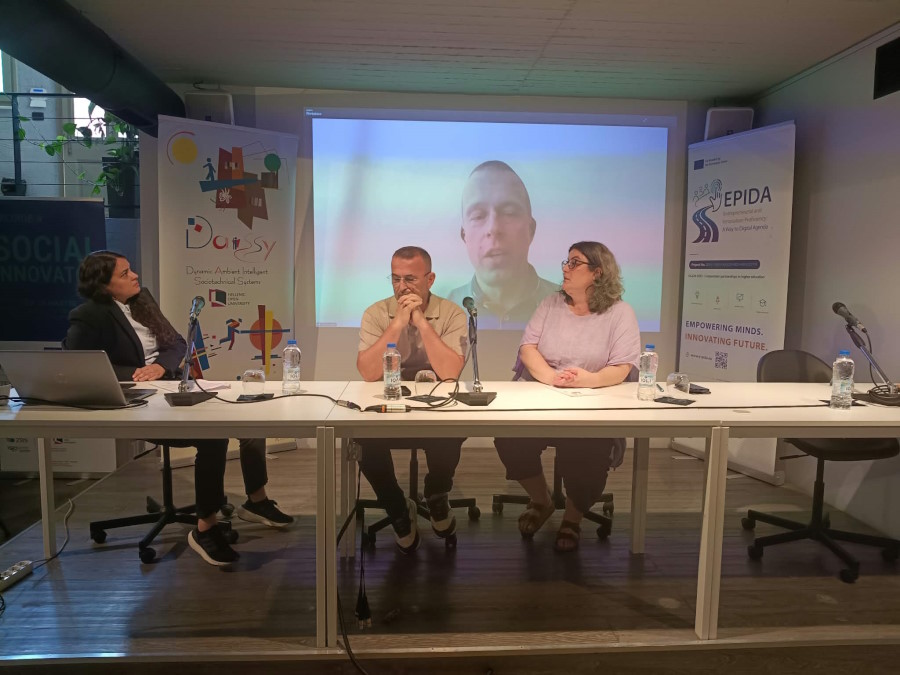
A three-day Learning, Teaching and Training Activity (LTTA) was organized with success, by the DAISSy Research Group of the Hellenic Open University (HOU), within the framework of the “DIDACTIVE – Develop Innovation in Digital and Agency Competences Training for Inclusive Vocational Education” European project. DIDACTIVE has been undergoing by DAISSy-HOU as the Greek partner and aims at enhancing digital and self-agency skills for Vocational Education and Training (VET), so as to empower adults with low skills and education levels.
The LTTA was organized and conducted by Mrs Panagiota Polymeropoulou, Senior Researcher of the DAISSy-HOU, and aimed at empowering VET trainers in order to:
- Critically analyse and interpret the concept of agency competence and its theoretical foundations in VET.
- Design and apply innovative strategies that foster agency among learners and trainers in complex vocational settings.
- Facilitate reflective and developmental learning processes using advanced coaching and feedback methods.
- Integrate and evaluate agency competence principles in curriculum design, learning outcomes, and assessment—promoting quality and innovation.
More precisely, the three-day LTTA brought together VET trainers, educators and researchers from all partner countries of the DIDACTIVE, namely Italy, France, Austria, Croatia and Greece, which achieved the project’s goal of strengthening innovation, creativity, and participatory teaching practices in the VET sector. The event was hosted at the headquarters of the Hellenic Open University in Patras (Greece), and fostered collaboration in a dynamic academic environment.
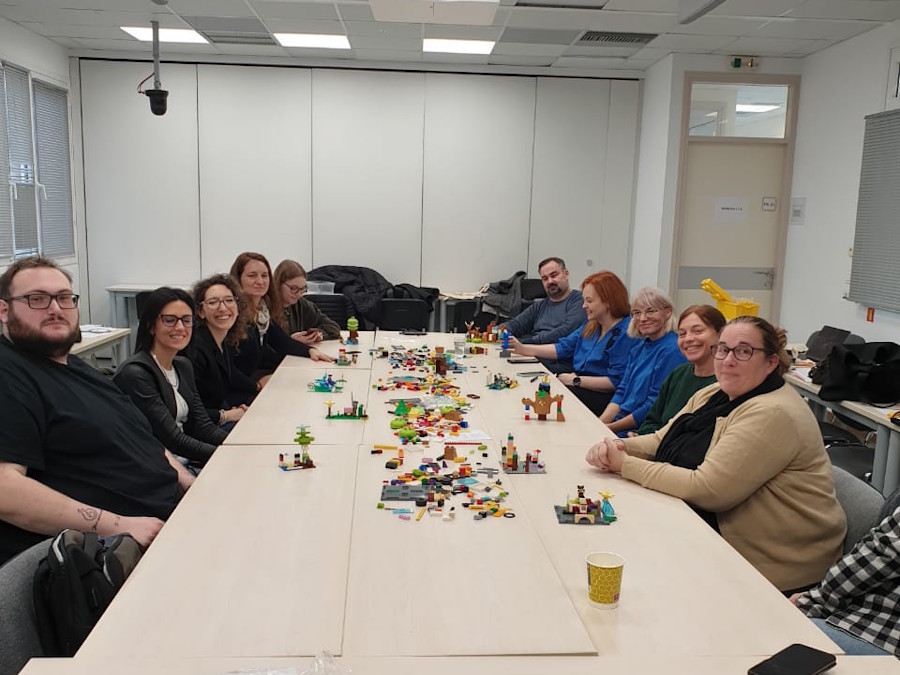
The LTTA was launched on Tuesday, 25 November, 2025 with a welcome session, including comprehensive presentations of the Hellenic Open University and the DAISSy Research Group, followed by networking and group activities. Participants familiarized with the Lego Serious Play methodology, taking part in hands-on activities presenting themselves. Within this concept, the first LTTA day focused on creativity, divergent thinking, and innovation. A simple guide on how to think “out of the box” and generate new ideas, offered participants practical, relevant tools, and enhanced teamwork and consultation skills.
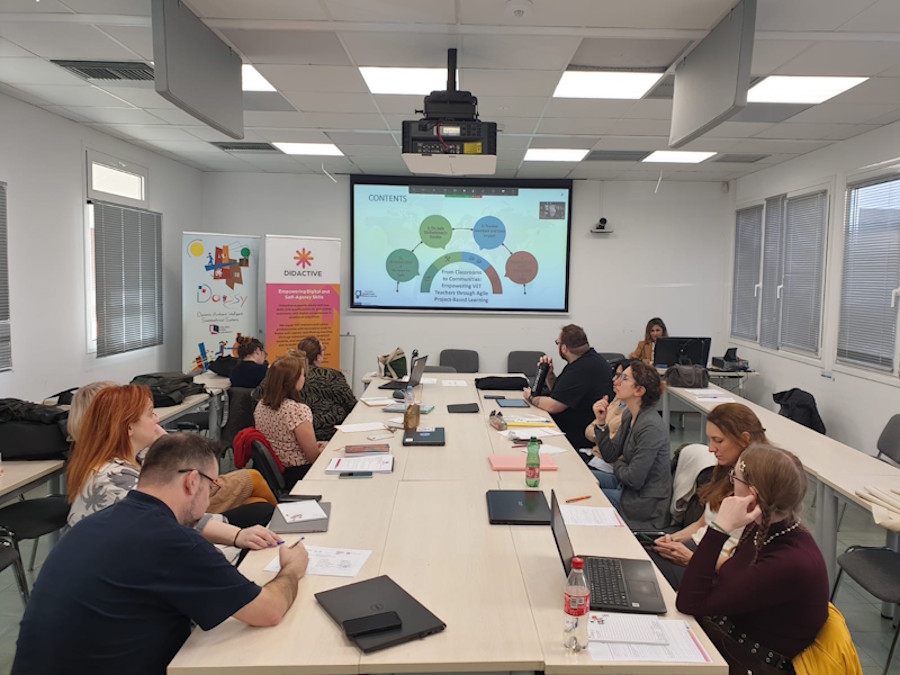
Furthermore, on Wednesday, 26 November, 2025 the agenda highlighted the Agile2Learn project-based learning, participatory teaching methods (such as role-play scenarios), as well as the development of the the “4Cs“ key-skills i.e. Creativity, Critical thinking, Communication, and Collaboration. A major component of the 2nd LTTA day was the introduction by DAISSy-HOU to the DIDACTIVE blended course, where participants worked collaboratively in groups on instructional design and development of their Module.
The final LTTA day, Thursday, 27 November, 2025 was dedicated to the completion of group work on the DIDACTIVE blended course modules, followed by the presentations of the results, an open discussion, and the evaluation of the LTTA. Indeed, the exchange of experiences and outcomes contributed to the project’s broader objective of empowering VET educators with innovative, inclusive, and learner-centered approaches.
Undoubtfully, the LTTA in Patras was a key milestone for the DIDACTIVE project, reinforcing European cooperation in education and supporting the professional development of educators committed to inclusive and innovative vocational training.
DIDACTIVE is a two-year project (30.10.2024-29.10.2026) funded by the ERASMUS Lump Sum Grant program of the European Union (EU). It is coordinated by “En.A.I.P. Piemonte” (Italy) and the project consortium includes six (6) partners in five (5) EU member states (Austria, Croatia, France, Greece, and the Netherlands). The DAISSy Research Group of the Hellenic Open University operates for the effective implementation of the project activities in Greece, while supporting relevant bodies, aiming at maximizing the exploitation of the project’s results.

The European Commission support for the production of this publication does not constitute endorsement of the contents which reflects the views only of the authors, and the Commission cannot be held responsible for any use which may be made of the information contained therein.