Following the fruitful kick-off meeting of the European project “Digital Competence Levels Assessment in School Education (DigiCLASS)” in March 2026, the consortium continued its collaboration with a strong focus on the establishment and activation of the International Pedagogical Committee (IPC). The first online meeting dedicated to this purpose was held on 26 May 2026, bringing together representatives of the project consortium and the Associated Partners to discuss the role, responsibilities, and planned activities of the IPC.
The DigiCLASS partnership brings together seven (7) full partners, namely: GIP Pix (France)-Coordinator, All Digital (Belgium), Egina (Italy), GTN (Austria), the Government of Aragon and the University San Jorge (Spain), and the Hellenic Open University-DAISSy Research Group (Greece). They are supported by nine (9) Associated Partners, forming a strong and diverse project consortium, across Europe.
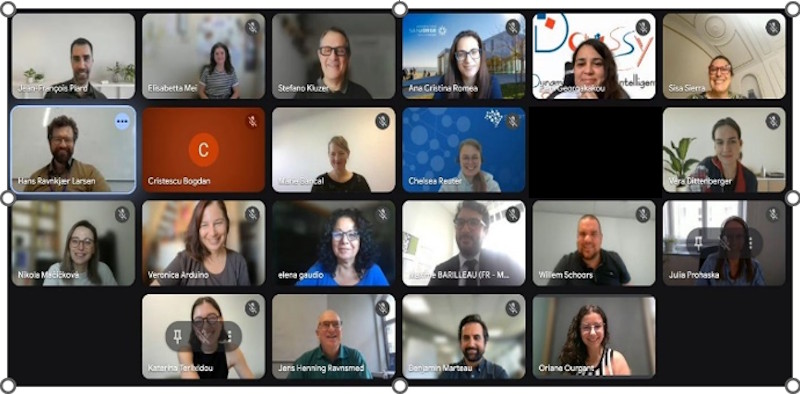
The DAISSy Research Group of Hellenic Open University (HOU), the only Greek project partner, was represented at the IPC exchange by Ms. Eleni Georgakakou, Head of Operations and Communications of DAISSy-HOU who actively participated in all activities.
Specifically, the first DigiCLASS IPC exchange session focused on presenting the project’s main objectives, its current state of play, and the ways in which Associated Partners will be involved throughout the project’s implementation.
A particular highlight of the discussion was the role of the IPC, since beyond advising, it will actively contribute to defining the DigiCLASS pedagogical approach, formulating Policy Recommendations and supporting the dissemination of results throughout the project’s lifecycle, helping good practices travel well beyond pilot sites.
DigiCLASS project, runs from March 01, 2026 till October 31, 2028, is co-funded by the ERASMUS+ program of the European Union and aims at analysing current practices, policies, and needs related to digital skills education and assessment in secondary education across several European countries.
The European Commission support for the production of this publication does not constitute endorsement of the contents which reflects the views only of the authors, and the Commission cannot be held responsible for any use which may be made of the information contained therein.